
How Attorneys Can Evaluate Medical Evidence in Electric Scooter Accident Cases
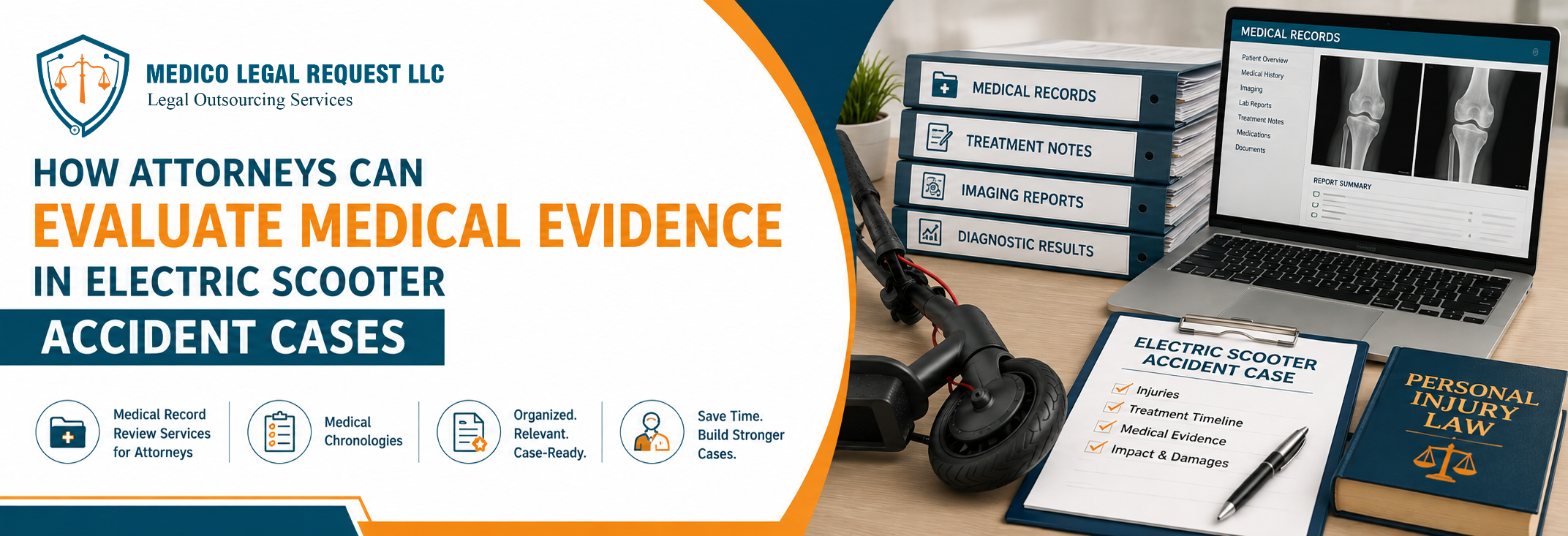
Electric scooter accidents can result in serious injuries and complex medical treatment. For attorneys handling these cases, reviewing and understanding the client's medical evidence is an important part of evaluating the claim, establishing the extent of injuries, and preparing a strong case.
Medical records often contain hundreds or even thousands of pages, including emergency room records, physician notes, diagnostic imaging, surgical reports, therapy records, medication histories, and follow-up evaluations. Identifying the information that matters to the legal case can be time-consuming.
A structured Medical Record Review can help organize this information and make it easier to identify important medical facts.
------
Why Medical Evidence Matters in Electric Scooter Accident Cases
An electric scooter accident may cause traumatic injuries that require immediate treatment as well as months or years of follow-up care. Depending on the circumstances, an injured person may experience fractures, head injuries, spinal injuries, soft-tissue injuries, or other complications.
For attorneys, medical evidence can help answer several important questions:
What injuries did the client sustain?
When were the injuries first documented?
What treatment was provided?
Did the client require surgery or hospitalization?
How did the injuries affect daily activities?
Did the client undergo physical or occupational therapy?
Are there documented complications or ongoing symptoms?
Were there pre-existing conditions?
Is additional treatment recommended?
A careful review can help attorneys develop a clearer understanding of the relationship between the accident, the injuries, treatment, and the client's ongoing medical condition.
------
Identify and Document the Initial Injuries
The first step in reviewing medical evidence is identifying the injuries documented immediately following the electric scooter accident.
Emergency department records and initial physician evaluations may contain important information about:
The reported mechanism of injury
The client's symptoms
Physical examination findings
Diagnoses
Imaging results
Initial treatment
Referrals to specialists
Discharge instructions
These records can provide an important starting point for understanding the client's medical course.
For example, an initial emergency room evaluation may document a fracture or head injury, while subsequent records may provide additional information about treatment, recovery, and complications.
------
Follow the Treatment Timeline
Medical evidence should be reviewed chronologically rather than as isolated records. Attorneys may need to determine how the client's condition progressed from the date of the accident through subsequent treatment.
A chronological review can identify:
Date of accident
Initial medical evaluation
Diagnostic testing
Specialist consultations
Surgical procedures
Hospitalization
Physical or occupational therapy
Follow-up appointments
Medication changes
Current symptoms and treatment recommendations
A Medical Chronology can organize these events into a clear timeline, allowing attorneys to quickly understand the client's treatment history.
------
Review Diagnostic Imaging and Test Results
Diagnostic testing can provide important evidence regarding the nature and severity of an injury.
Depending on the case, medical records may include:
X-rays
CT scans
MRI examinations
Ultrasounds
Neurological testing
Laboratory testing
Other diagnostic evaluations
Attorneys should pay attention to the documented findings and how those findings relate to the diagnoses and treatment decisions.
For example, imaging may help establish the presence of a fracture, spinal injury, ligament damage, or other trauma. Follow-up imaging may also demonstrate healing, persistent abnormalities, or complications.
------
Evaluate Surgical and Procedural Treatment
Some electric scooter accident injuries require surgical intervention or other procedures.
When reviewing surgical records, attorneys should identify:
The reason for the procedure
The diagnosis leading to surgery
The procedure performed
Operative findings
Complications
Post-operative treatment
Follow-up recommendations
Surgical records can provide significant detail about the severity of an injury and the treatment required.
These records should be reviewed together with the surrounding medical documentation to understand the complete treatment history.
------
Consider Pre-Existing Conditions
Pre-existing medical conditions can become an important issue in personal injury litigation.
A client may have medical conditions or previous injuries that existed before the electric scooter accident. A thorough review should distinguish between:
Conditions documented before the accident
New injuries documented after the accident
Changes in symptoms following the accident
Aggravation or worsening of an existing condition
New treatment associated with the post-accident condition
Attorneys should avoid relying solely on a diagnosis appearing in a single medical record. Reviewing the client's records before and after the accident can provide a more complete picture.
------
Look for Gaps and Inconsistencies in the Medical Records
Medical records are not always perfectly organized.
Different providers may document the same event differently, and records may contain gaps in dates, treatment history, symptoms, or diagnoses.
During a Legal Medical Record Review, attorneys may benefit from identifying:
Missing treatment periods
Conflicting dates
Differences in reported symptoms
Changes in diagnosis
Inconsistent descriptions of the accident
Treatment gaps
Unexplained changes in medication
Differences between imaging findings and clinical notes
Identifying these issues early can help attorneys determine whether additional records or clarification may be necessary.
------
Evaluate the Impact of the Injuries
Medical evidence should not be limited to diagnoses and procedures. Attorneys may also need to understand how the injuries affected the client's everyday life.
Medical records may document limitations involving:
Walking
Standing
Sitting
Lifting
Working
Driving
Sleeping
Personal care
Recreational activities
Physical therapy and rehabilitation records can be particularly useful because they may document functional limitations, progress, pain levels, and treatment goals over time.
------
Review Medications and Ongoing Treatment
Medication histories can provide additional context regarding the client's treatment.
Depending on the injury, records may document medications for:
Pain
Inflammation
Muscle spasms
Neurological symptoms
Infection
Post-surgical recovery
Attorneys should also identify whether the client continues to receive treatment or whether physicians have recommended future care. Ongoing treatment recommendations may be relevant when evaluating the potential long-term impact of the injuries.
------
Use Medical Record Review Services to Organize Complex Cases
Large personal injury cases can involve extensive medical documentation from multiple healthcare providers. Manually reviewing every page can consume valuable attorney and staff time. Medical Record Review Services can help attorneys organize large volumes of medical documentation and identify relevant information related to the accident and resulting injuries.
Depending on the case requirements, the review may include:
Injury identification
Treatment history
Diagnostic findings
Surgical procedures
Medication history
Therapy and rehabilitation
Pre-existing conditions
Treatment gaps
Relevant medical events
Current and future treatment information
Professional Medical Record Review Experts can review records and organize important medical information into a format that is easier for attorneys to analyze.
------
Consider Medical Record Review Outsourcing
For law firms managing multiple personal injury cases, Medical Record Review Outsourcing can provide an efficient way to handle large volumes of medical documentation.
Outsourcing can allow attorneys and their legal teams to spend more time on case strategy, client communication, discovery, negotiations, and litigation while qualified professionals organize and review the medical records.
The exact scope of outsourced review can be customized according to the needs of the case and the attorney.
------
Conclusion
Evaluating medical evidence is an important component of preparing an electric scooter accident case. From initial emergency treatment and diagnostic imaging to surgery, rehabilitation, and ongoing care, the medical record can contain critical information that helps attorneys understand the client's injuries and treatment history.
However, reviewing extensive medical documentation can be challenging and time-consuming. Medical Record Review Services for Attorneys can help organize complex records, identify significant medical events, and provide attorneys with a clearer picture of the client's medical history.
Whether the case involves a straightforward injury or a complex medical history, organized medical evidence can make the review process more efficient and help attorneys focus on the legal issues that matter most.
------
Frequently Asked Questions
------
What medical evidence is important in an electric scooter accident case?
Important medical evidence may include emergency room records, physician notes, diagnostic imaging, surgical reports, specialist evaluations, physical therapy records, medication history, and follow-up treatment records. These documents can help establish the nature, severity, and progression of the injuries.
------
Why is medical record review important in an electric scooter accident lawsuit?
Medical record review can help attorneys identify relevant injuries, treatment timelines, diagnostic findings, pre-existing conditions, treatment gaps, and ongoing medical issues. Organizing this information can make a complex medical history easier to evaluate.
------
How can a medical chronology help an attorney?
A medical chronology organizes important medical events in chronological order, including dates, providers, diagnoses, treatments, procedures, and significant findings. This can help attorneys quickly understand the client's medical history without reviewing every page of the underlying records.
------
What injuries are commonly documented after electric scooter accidents?
Depending on the circumstances, electric scooter accidents may result in fractures, head and traumatic brain injuries, spinal injuries, soft-tissue injuries, cuts and lacerations, and other orthopedic or neurological injuries. The medical records should be reviewed to determine the specific injuries and treatment involved in each case.
------
Can medical records help establish the severity of injuries?
Medical records can document diagnoses, imaging findings, procedures, hospitalization, treatment duration, rehabilitation, medications, symptoms, and functional limitations. Reviewing these records together can provide a more complete picture of the documented injury and treatment course.