
How Medical Record Sorting and Indexing Services Help Attorneys Manage Complex Cases
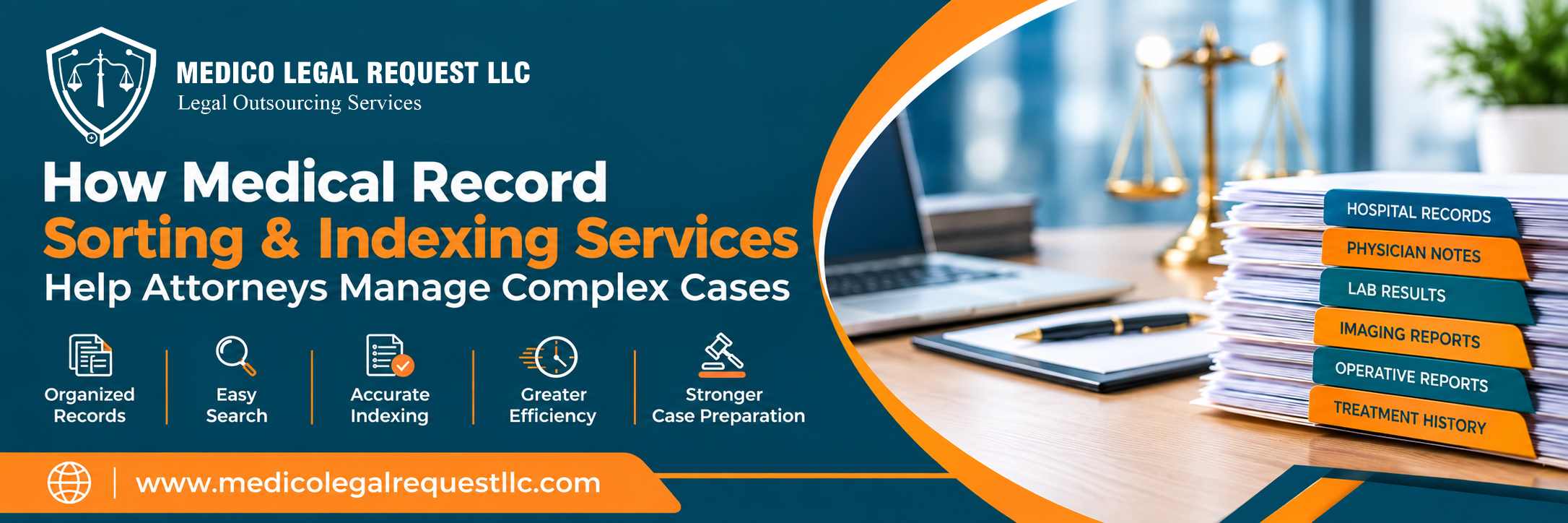
Medical records often contain critical evidence that can influence the direction and outcome of a legal case. However, reviewing large volumes of medical documentation can be challenging when records arrive from multiple healthcare providers, hospitals, specialists, laboratories, and other sources.
For attorneys handling personal injury, medical malpractice, workers’ compensation, product liability, mass tort, and other medical-legal cases, finding relevant information quickly is essential. Medical Record Sorting & Indexing Services help transform disorganized medical documentation into a structured and easy-to-navigate record set.
By organizing records chronologically, categorizing documents, identifying key medical events, and creating detailed indexes, these services allow legal teams to spend less time searching through paperwork and more time evaluating the evidence.
-----
What Are Medical Record Sorting & Indexing Services?
Medical record sorting and indexing involves systematically organizing a patient's medical documentation so that attorneys and legal professionals can locate important information efficiently.
Medical records may include:
Hospital and emergency room records
Physician and specialist notes
Operative reports
Diagnostic imaging reports
Laboratory results
Medication records
Nursing notes
Physical therapy records
Medical bills
Discharge summaries
Referral records
Insurance-related medical documentation
Prior medical history
Follow-up treatment records
When these documents are received from different sources, they may be duplicated, out of order, mislabeled, or difficult to navigate. A professional sorting and indexing process organizes these records into a logical structure and provides an index that helps attorneys quickly identify where important information is located.
-----
Why Organized Medical Records Matter in Complex Legal Cases
Complex cases can involve years of treatment and thousands of pages of medical documentation. Important evidence may be buried within routine clinical notes, diagnostic reports, or treatment records.
Without proper organization, attorneys and their teams may spend significant time searching for:
The date of an injury
Initial diagnosis
Previous medical conditions
Surgical procedures
Treatment progression
Diagnostic findings
Medication changes
Specialist consultations
Complications
Gaps in treatment
Follow-up care
Functional limitations
Properly sorted and indexed records provide a clearer view of the patient's medical history and make it easier to identify relevant evidence.
-----
1. Creates a Chronological Structure
One of the most important benefits of medical record sorting is establishing a logical chronological order.
Records from different providers may cover overlapping periods and arrive in inconsistent formats. Sorting them according to service date helps attorneys follow the patient's medical journey from the initial incident through diagnosis, treatment, recovery, or ongoing care.
A chronological organization can make it easier to understand:
Incident → Initial Treatment → Diagnosis → Specialist Care → Procedures → Follow-Up → Current Status
This structure can be particularly valuable when evaluating causation, treatment progression, and the relationship between an incident and subsequent medical care.
-----
2. Makes Large Medical Records Easier to Navigate
A complex case may contain hundreds or thousands of pages. Searching manually through every document can consume valuable time. Indexing provides a roadmap to the records.
Instead of opening documents one by one, an attorney can use the index to locate the relevant record more efficiently.
-----
3. Helps Identify Important Medical Events
Medical records contain both highly relevant information and routine documentation.
Sorting and indexing helps highlight significant events such as:
Emergency visits
New diagnoses
Surgeries
Hospitalizations
Diagnostic tests
Imaging studies
Specialist evaluations
Changes in treatment
Complications
Rehabilitation
Follow-up appointments
This organization helps legal professionals quickly understand the major events within a patient's treatment history.
-----
4. Helps Attorneys Review Prior Medical History
Previous medical conditions can be important in many legal cases.
Organized records can make it easier to distinguish between:
Pre-existing conditions
Conditions associated with the alleged incident
New diagnoses
Aggravation of an existing condition
Subsequent injuries or medical events
This can be particularly relevant when attorneys are evaluating causation, damages, or arguments concerning the patient's medical history.
-----
5. Reduces Time Spent Searching Through Records
Attorneys and legal staff have limited time. Manually sorting and organizing large medical files can take hours or even days depending on the volume and complexity of the records.
Outsourcing medical record sorting and indexing can reduce the administrative burden on legal teams. Instead of spending extensive time determining where each document belongs, attorneys can receive an organized record set that is easier to review.
-----
6. Supports Medical Chronology Preparation
Medical record sorting and indexing can serve as an important preliminary step before preparing a medical chronology. Once records are properly organized, relevant medical events can be identified more efficiently.
A structured record set can help medical-legal professionals prepare chronologies that summarize:
Dates of treatment
Healthcare providers
Diagnoses
Symptoms
Procedures
Test results
Medications
Treatment recommendations
Patient complaints
Follow-up care
The quality of the underlying organization can significantly influence the efficiency of subsequent medical record review.
-----
7. Helps Locate Missing or Potentially Duplicate Records
Another advantage of indexing is that it can make inconsistencies easier to recognize.
For example, an organized record set may reveal:
Duplicate documents
Missing pages
Repeated records
Gaps between treatment dates
Records received from multiple facilities
Incomplete document sets
Identifying these issues early can help legal teams determine whether additional records may be needed.
-----
8. Improves Case Preparation
Well-organized medical records can support several stages of case preparation.
Attorneys may use organized records when preparing for:
Client interviews
Depositions
Medical expert review
Settlement negotiations
Mediation
Trial preparation
Discovery
Demand packages
When important medical information can be located quickly, attorneys can spend more time analyzing the evidence and developing their case strategy.
-----
9. Useful for High-Volume and Complex Litigation
Medical record sorting and indexing becomes especially valuable when a case involves extensive documentation.
Examples include:
Personal Injury Cases
In personal injury litigation, attorneys may need to evaluate treatment following an accident, including emergency care, diagnostic testing, surgery, rehabilitation, and follow-up treatment.
Medical Malpractice Cases
Medical malpractice matters may involve extensive records from multiple providers and facilities. Organized records can help legal teams review the sequence of medical events and identify potentially relevant documentation.
Product Liability and Mass Tort Cases
Product liability and mass tort cases can involve substantial medical documentation and multiple treatment providers. A consistent sorting and indexing process can make large record collections easier to manage.
Workers' Compensation Cases
Workers' compensation cases may require review of workplace injuries, previous conditions, treatment, work restrictions, rehabilitation, and ongoing care.
-----
Medical Record Sorting vs. Medical Record Indexing
Although the terms are often used together, sorting and indexing serve different purposes.
Medical record sorting focuses on arranging documents into a logical structure, often based on dates, providers, facilities, and record types.
Medical record indexing creates a reference system that allows users to quickly identify and locate specific documents or medical events.
Together, sorting and indexing create a more efficient way to navigate complex medical documentation.
-----
What Should a Medical Record Index Include?
The exact format can vary depending on the case and attorney's requirements. However, a useful index may include:
Date of service
Provider or facility
Document type
Page range
Medical event
Diagnosis
Procedure
Relevant description
Record source
Customized indexing can also be performed based on the specific needs of a case.
For example, an attorney handling a surgical injury case may want an index that makes operative reports, imaging studies, postoperative visits, and rehabilitation records particularly easy to locate.
-----
Benefits of Outsourcing Medical Record Sorting & Indexing
Law firms may choose to outsource medical record organization rather than assigning the task to attorneys or internal legal staff.
Potential benefits include:
Time Savings
Legal professionals can reduce the amount of time spent on administrative record organization.
Improved Accessibility
Organized records make relevant medical information easier to locate.
Scalable Support
Outsourcing can be useful when a firm receives a large volume of records or handles multiple cases simultaneously.
Consistent Organization
A standardized process can help maintain consistency across different case files.
Better Workflow
Organized records can provide a stronger foundation for chronology preparation, medical review, and case analysis.
-----
Choosing a Medical Record Sorting & Indexing Service
When selecting a service provider of medical record sorting, attorneys and law firms should consider factors such as:
Experience with medical-legal records
Understanding of legal case workflows
Ability to handle large record volumes
Quality-control procedures
Turnaround time
Data security and confidentiality
Flexible formatting and indexing requirements
Ability to support different types of cases
The goal should not simply be to arrange documents. The service should help make medical evidence easier for legal professionals to navigate and review.
-----
Conclusion
Complex medical-legal cases often depend on information spread across hundreds or thousands of pages of medical documentation. Without proper organization, finding relevant evidence can become time-consuming and inefficient.
Medical Record Sorting & Indexing Services help attorneys transform disorganized medical records into a structured, navigable resource. By organizing records chronologically, categorizing documents, creating useful indexes, and identifying important medical events, these services can support more efficient case preparation and medical evidence review.
For law firms managing demanding caseloads, professional medical record sorting and indexing can be a practical way to reduce administrative workload while making critical medical information easier to access.
When medical records are organized properly, attorneys can spend less time searching for information, and more time focusing on the legal issues that matter.
-----
Frequently Asked Questions
------
What are Medical Record Sorting & Indexing Services?
Medical Record Sorting & Indexing Services organize medical documents into a structured, easy-to-navigate format. Records can be sorted chronologically, categorized by provider or document type, and indexed to help attorneys quickly locate relevant medical information.
------
Why is medical record sorting important for attorneys?
Medical records can contain hundreds or thousands of pages from multiple healthcare providers. Sorting these records creates a logical structure, making it easier for attorneys to understand treatment history and locate important evidence.
------
What types of medical records can be sorted and indexed?
Services can typically organize hospital records, physician notes, diagnostic reports, imaging records, operative reports, laboratory results, medication records, therapy notes, discharge summaries, medical bills, and other relevant medical documentation.
------
How does medical record indexing help law firms?
An index provides a reference guide to the medical records. Attorneys can use it to quickly locate specific dates, providers, procedures, diagnoses, test results, and other important medical events without searching through the entire record set.
------
Can medical record sorting help with medical chronology preparation?
Yes. Properly sorted and indexed records provide an organized foundation for preparing medical chronologies by making treatment dates, providers, diagnoses, procedures, and other medical events easier to identify.
------
What types of legal cases can benefit from medical record sorting and indexing?
These services can support personal injury, medical malpractice, workers' compensation, product liability, mass tort, automobile accident, and other cases involving substantial medical documentation.
------
How can organized medical records improve case preparation?
Organized records make important medical information easier to access during client interviews, discovery, medical expert review, depositions, settlement negotiations, mediation, and trial preparation.
------
What information is typically included in a medical record index?
Depending on the attorney's requirements, an index may include the date of service, provider or facility, document type, page range, medical event, diagnosis, procedure, and a brief description of the record.